IRDAI Insurance Reforms 2026
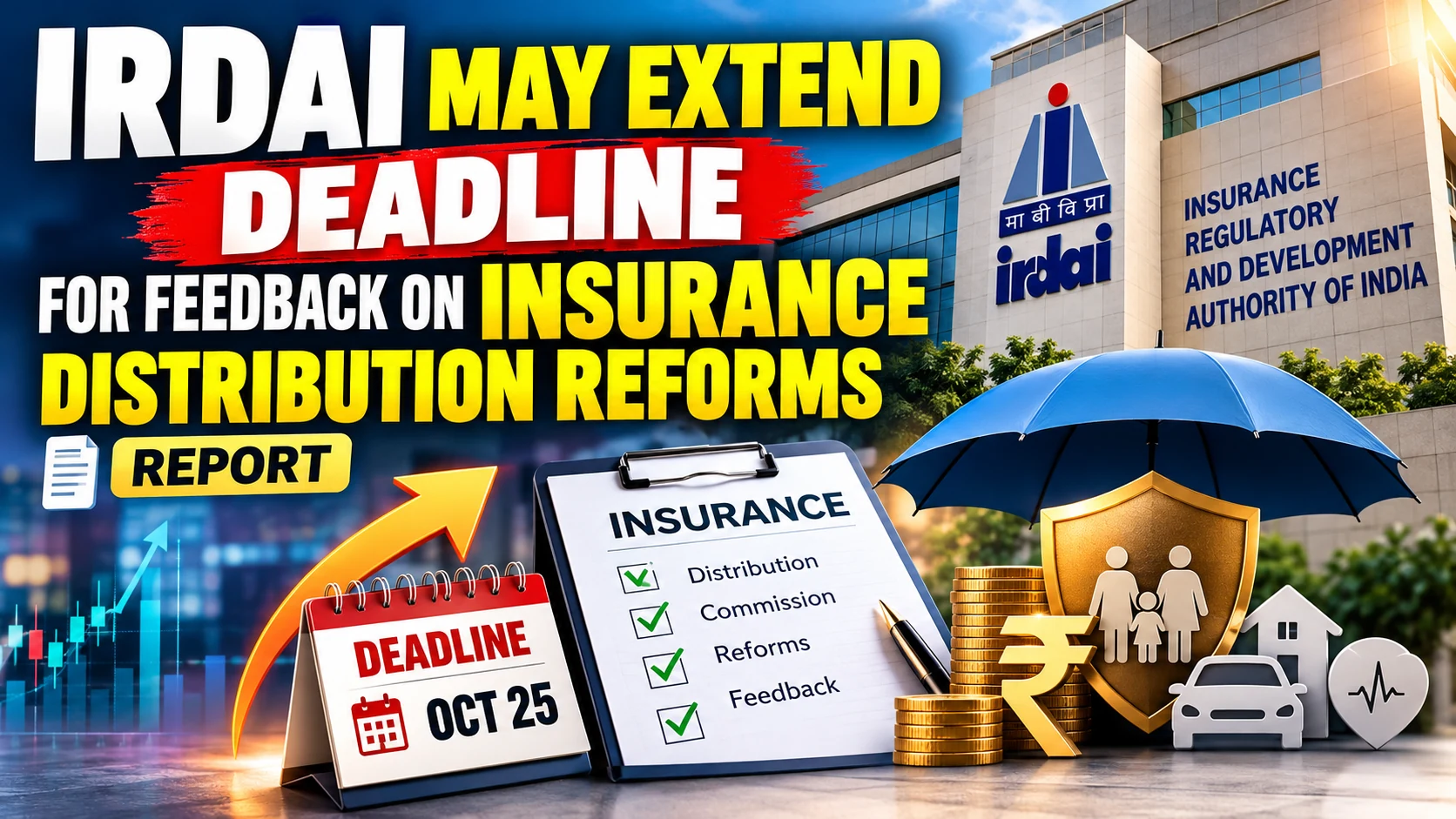
IRDAI insurance reforms 2026: India’s insurance industry could receive additional time to respond to major regulatory changes as the Insurance Regulatory and Development Authority of India (IRDAI) reportedly considers extending the October 25, 2026, deadline for feedback on its proposed insurance distribution reforms.
The proposals, introduced on September 23, aim to reduce insurance distribution expenses, regulate commissions, improve transparency, and protect policyholders from unsuitable insurance sales.
However, insurance companies, banks, brokers, and automobile dealers have raised concerns about the financial and operational impact of the proposed framework.
According to recent reports, the regulator may allow more time for consultations and potentially reconsider the implementation schedule.
Importantly, no deadline extension has been confirmed as of October 13, 2026.
🔴 IRDAI Insurance Reforms 2026: Key Highlights
- 📅 Consultation paper released: September 23, 2026.
- ⏰ Current feedback deadline: October 25, 2026.
- 🏦 Major concerns: Commission limits and bancassurance restrictions.
- 💰 Regulatory objective: Reduce distribution expenses and improve customer protection.
- 📉 Industry warning: Brokers anticipate significant revenue pressure.
- ⚖️ Current status: A deadline extension is reportedly under consideration, not officially confirmed.
📊 IRDAI Insurance Reforms 2026
A visual guide to proposed commission caps, expense limits, consultation deadlines, and potential industry impacts.
⚠️ Draft proposals — not final rules📉 Proposed Expense-of-Management Limits
Draft percentage limits as a share of premium. All bars use a common scale of 0% to 25%.
🛡️ Life Insurance
🏦 General Insurance
💰 Proposed Insurance Commission Changes
Selected reported ranges and product-specific proposals. Rates vary by category and arrangement.
🏢 Distribution Entities
5–20%Reported range of proposed first-year commission caps for relevant entities.
👤 Individual Agents
6.25–25%Reported range of proposed first-year commission caps for individual agents.
🚗 Motor Own-Damage
5%Reported proposed cap for specified motor insurance distribution arrangements.
🚘 New-Vehicle Third-Party
0%Proposal to eliminate distributor commissions in this specified category.
📅 IRDAI Reform Timeline
Key dates and reported milestones.
Reported release of the insurance distribution consultation proposals.
Industry objections and the possibility of a consultation extension remain in focus.
Current reported feedback deadline, subject to an official extension.
Previously reported implementation target, subject to regulatory decisions.
🔎 Who Could Be Affected?
Potential effects if significant elements of the proposed reforms are adopted.
Possible changes to bancassurance commissions, partnerships and fee income.
Potential pressure on revenue and the cost of providing customer advice.
Possible changes to commission structures and customer servicing models.
Potential changes to income from distributing motor insurance policies.
Pressure to control expenses, improve efficiency and revise agreements.
Possible transparency improvements, but premium savings are not guaranteed.
⚖️ What Does This Mean for Customers?
✅ Potential Benefits
Better cost transparency, stronger safeguards against unsuitable sales, and potentially more efficient insurance distribution.
⚠️ Potential Challenges
Changes in access to personal advice, intermediary service models and distribution coverage in smaller markets.
🏦 Why Is IRDAI Considering a Deadline Extension?
The proposed reforms represent a significant potential change in how insurance products are marketed, distributed, and sold across India.
Insurance companies rely on several distribution channels, including individual agents, banks, brokers, digital platforms, and automobile dealerships.
These intermediaries receive commissions or other payments for helping insurers acquire and serve customers.
IRDAI wants to examine whether high distribution expenses are increasing insurance costs or encouraging inappropriate sales practices.
However, industry representatives argue that reducing commissions too aggressively could make some distribution businesses financially unsustainable.
The Insurance Brokers Association of India (IBAI) has requested an extension of the consultation period until the end of December 2026.
A longer consultation period could allow stakeholders to submit detailed financial assessments and suggest alternative approaches.
💰 What Are the Proposed Insurance Commission Caps?
One of the most closely watched elements of the IRDAI consultation paper is the proposed restriction on commissions.
The draft proposes different first-year commission limits depending on the insurance product and distributor category.
Reported ranges include:
- Distribution entities: 5% to 20%.
- Individual agents: 6.25% to 25%.
- Motor own-damage insurance: A proposed 5% commission cap for relevant distribution arrangements.
- New-vehicle third-party motor insurance: A proposal to eliminate distributor commissions.
These figures are proposed limits, not universally applicable commission rates.
The actual permitted commission would depend on the final regulatory framework and the relevant product category.
Why Do Commission Caps Matter?
Insurance commissions help pay for customer acquisition, advice, documentation, policy servicing, and claims assistance.
Lower commissions could reduce distribution expenses and potentially support more affordable insurance products.
However, brokers argue that smaller commissions may also reduce their ability to serve customers in rural areas, smaller towns, and lower-premium market segments.
The challenge is finding a balance between affordability and accessible insurance services.
📊 IRDAI Proposed Expense Limits: What Could Change?
Alongside commission restrictions, IRDAI has proposed reducing insurers’ expenses of management over several years.
Expenses of management include certain operating and distribution costs incurred by insurance companies.
The consultation framework reportedly proposes the following targets:
| Insurance category | Within 2 years | Within 5 years |
|---|---|---|
| Life insurers | 15% | 12.5% |
| General insurers | 25% | 20% |
These percentages represent proposed expense ceilings as a share of premiums under the draft framework.
They should not be confused with commission percentages or guaranteed reductions in customer premiums.
If implemented, insurers may need to improve operational efficiency, review distribution agreements, and reconsider how they compensate intermediaries.
🏦 Why Are Banks Concerned About Bancassurance Reforms?
Bancassurance refers to the distribution of insurance products through banks.
Banks frequently offer life, health, and other insurance products to customers through their existing branch networks and financial relationships.
This channel provides insurers with access to a large customer base.
However, IRDAI has questioned whether the scale of bank distribution is producing sufficient cost efficiencies and better outcomes for customers.
Proposed restrictions could affect commission income earned by banks and change how insurance products are offered alongside banking services.
The Reserve Bank of India has also indicated that it will examine the proposals and communicate its views to the insurance regulator.
For banks, the reforms could influence fee income, insurance partnerships, and product distribution strategies.
For customers, stronger safeguards could potentially reduce pressure to purchase unsuitable insurance products.
⚠️ Insurance Brokers Warn About Revenue and Employment Risks
Insurance brokers have expressed particularly strong opposition to certain proposals.
Industry representatives estimate that the proposed changes could reduce brokerage revenues by approximately 60% to 70% in some scenarios.
The IBAI has also warned that up to one million livelihoods could be affected over five years.
These are industry projections rather than confirmed outcomes.
Brokers argue that insurance distribution involves more than selling a policy.
Their services can include comparing products, explaining exclusions, assisting with renewals, and supporting customers during claims.
Industry groups believe substantial commission reductions could discourage intermediaries from serving smaller customers.
IRDAI’s challenge will be determining whether these concerns justify modifications while preserving its consumer-protection objectives.
🚗 How Could Motor Insurance Distribution Change?
Automobile dealers are another group closely following the consultation process.
Dealerships often arrange motor insurance when customers purchase vehicles.
The proposed framework includes restrictions on commissions for certain motor insurance products, including third-party and own-damage coverage.
Dealer representatives argue that insurance-related services continue beyond the initial vehicle purchase.
They may help customers with renewals, documentation, and claims coordination.
A significant reduction in commission income could therefore encourage dealerships to review their insurance distribution arrangements.
However, the final effect will depend on the rules eventually adopted and how insurers restructure their distribution networks.
👨👩👧 What Do the Proposed IRDAI Rules Mean for Policyholders?
For ordinary insurance customers, the reforms could bring both opportunities and challenges.
Potential benefits include:
- Greater transparency around insurance distribution.
- Reduced incentives for unsuitable policy recommendations.
- More efficient insurance sales processes.
- Potential savings if lower distribution costs reach customers.
Potential concerns include:
- Reduced access to personal insurance advice.
- Changes in broker and agent service models.
- Fewer intermediaries serving low-premium customers.
- Uncertainty over whether commission savings will reduce premiums.
Consumers should remember that lower commissions do not automatically mean lower insurance prices.
Premiums also depend on factors such as claims experience, coverage, risk assessment, and insurer operating costs.
📅 When Could the New IRDAI Insurance Rules Take Effect?
The consultation paper was released on September 23, 2026, with an initial feedback deadline of October 25.
Earlier reporting indicated that the regulator was targeting implementation around April 2027.
However, insurers have requested additional preparation time and, in some cases, phased implementation.
If consultations are extended, the final implementation schedule could also change.
Until IRDAI formally announces its decisions, both the extension and any revised implementation date remain uncertain.
❓ Frequently Asked Questions (FAQs)
1. What are the IRDAI insurance reforms 2026?
They are proposed changes to insurance distribution, commission structures, and management expenses intended to improve efficiency, affordability, transparency, and policyholder protection.
2. Has IRDAI extended the October 25 deadline?
As of October 13, 2026, an extension has been reported as a possibility, but no officially confirmed revised deadline has been established in the reporting reviewed.
3. Will insurance premiums become cheaper?
Lower distribution expenses could support reduced costs, but premium reductions are not guaranteed. Insurers’ pricing decisions and claims costs will also matter.
4. Why are insurance brokers opposing the proposals?
Brokers are concerned that lower commissions could reduce revenue, threaten employment, and make it harder to provide services to customers in smaller markets.
5. When will the new insurance rules be implemented?
April 2027 has been discussed as an intended implementation period, but the final schedule may change following consultations and regulatory decisions.
🔍 Conclusion: What Happens Next?
The IRDAI insurance reforms 2026 could significantly reshape India’s insurance distribution industry.
While the regulator aims to improve consumer protection and control distribution expenses, insurers, banks, brokers, and automobile dealers want sufficient time to assess the proposals.
The next important development will be an official announcement regarding the October 25 consultation deadline.
Policyholders should monitor the final rules rather than assume that proposed commission caps or premium changes are already in effect.
Ultimately, the success of the reforms will depend on whether India can make insurance more affordable without weakening the distribution networks that help millions of people obtain coverage.
About the Author